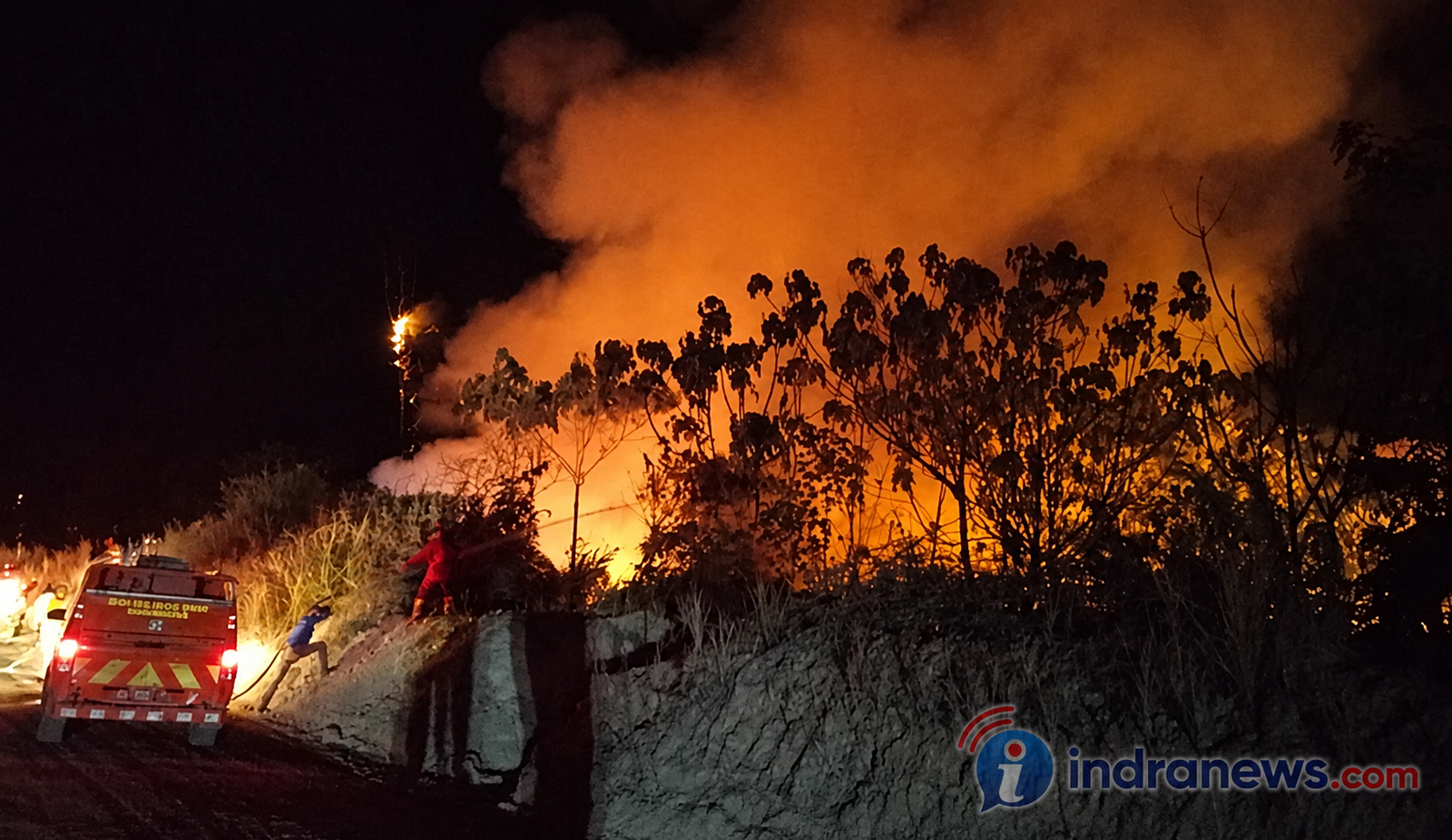
Kalimantan Wildfires Trigger Growing Regional Concerns
Indra News— Forest and land fires raging across several parts of Kalimantan have become a growing environmental concern, with their impact no longer limited to Indonesia.
Smoke from the fires has spread across large areas and has the potential to travel beyond Indonesia’s borders, affecting air quality in neighboring countries.
Malaysia has emerged as one of the countries experiencing the effects of worsening haze in recent weeks, particularly in Sarawak, which shares the island of Borneo with Indonesia’s Kalimantan region.
The deteriorating air quality has disrupted daily activities and education, with hundreds of schools temporarily closed as authorities seek to protect students and teachers from unhealthy air.
On August 20, 2026, 591 schools in Sarawak were ordered to close temporarily because of worsening haze and unhealthy air quality.
The closures included 509 primary schools and 82 secondary schools across several districts.
The situation highlights how forest and land fires can quickly develop from a domestic environmental disaster into a regional problem affecting public health, education, transportation and economic activity.
More Than 1,400 Hotspots Detected Across Kalimantan
The scale of the fire threat can be seen in the large number of hotspots detected across Kalimantan.
According to Indonesia’s National Disaster Mitigation Agency, or BNPB, satellite monitoring using NOAA-20 recorded 1,487 hotspots across Kalimantan as of August 20, 2026.
Central Kalimantan recorded the highest number, with approximately 767 hotspots.
West Kalimantan followed with 560 hotspots, while South Kalimantan and East Kalimantan each recorded 74 hotspots. North Kalimantan recorded three.
A hotspot does not automatically mean that a large fire is occurring at every detected location. However, a sharp increase in hotspot activity is an important warning indicator, particularly during prolonged dry weather.
Authorities use satellite monitoring to identify areas at risk of forest and land fires before flames spread further.
This technology is especially important in Kalimantan, where forests, plantations and peatlands cover vast areas, some of which are difficult to reach by ground crews.
Early detection can significantly improve the chances of controlling fires before they expand into a major disaster.
Smoke From Kalimantan Reaches Malaysia
Concerns increased as haze associated with fires in Kalimantan began affecting air quality across the border.
Smoke from fires in parts of West Kalimantan has been linked to deteriorating air conditions in Sarawak, Malaysia.
Because Kalimantan and Sarawak are located on the same island, smoke can travel across the border depending on wind speed, wind direction and atmospheric conditions.
During severe forest fires, smoke particles may travel hundreds of kilometers away from their original source.
This means a fire occurring in one Indonesian province can potentially affect millions of people living far from the burning area.
The haze problem illustrates why forest fires in Southeast Asia are increasingly viewed as a regional environmental issue rather than a purely national problem.
591 Schools in Sarawak Temporarily Closed
One of the most significant consequences of the worsening haze has been the disruption of education in Malaysia.
On August 20, authorities in Sarawak ordered 591 schools under 10 district education offices to temporarily suspend face-to-face classes on August 20 and 21.
The affected districts included Kuching, Padawan, Bau, Lundu, Samarahan, Simunjan, Serian, Sri Aman, Lubok Antu and Betong.
The closures involved more than 100,000 primary school students and tens of thousands of secondary school students.
Students were instructed to continue their lessons from home while air quality remained at unhealthy levels.
The move was taken as a precaution to minimize exposure to polluted air, particularly among children, who are more vulnerable to respiratory problems caused by smoke.
The latest closures were not the first education disruption linked to haze this month.
Earlier, on August 12, 108 schools in the Serian area were also temporarily closed after the local Air Pollutant Index, or API, exceeded 200.
At the time, Serian recorded an API reading of around 202, while Tebedu reached approximately 212.
Under Malaysian guidelines, schools and childcare facilities may be closed when air pollution reaches very unhealthy levels.
Why Are Kalimantan Wildfires So Difficult to Control?
Several factors make forest and land fires particularly dangerous during Indonesia’s dry season.
Prolonged periods without rainfall can dry out vegetation, grasslands and forest floors, making them highly combustible.
Once a small fire begins, strong winds and dry conditions can cause flames to spread rapidly.
However, one of the most difficult challenges involves peatland fires.
Peat contains large amounts of partially decomposed organic material that can burn underground.
Unlike ordinary surface fires, peat fires can continue smoldering beneath the ground even when visible flames have disappeared.
This makes them extremely difficult to extinguish.
Firefighters may need large amounts of water to completely saturate the affected peatland and prevent underground fires from reigniting.
Peat fires also produce large quantities of thick smoke, which can contribute significantly to regional haze.
Dry Weather Increases Fire Risk
Indonesia regularly faces an increased risk of forest fires during the dry season.
Periods of hotter weather, lower rainfall and dry vegetation can create ideal conditions for fires to develop.
The Indonesian Meteorology, Climatology and Geophysics Agency, or BMKG, has repeatedly warned of increased wildfire risks in vulnerable regions during prolonged dry conditions.
Kalimantan is among the areas requiring particular attention because of its extensive forests, plantations and peatlands.
Authorities have therefore increased monitoring in areas considered vulnerable to fires.
Weather conditions play an important role not only in determining how easily fires start, but also in determining where the resulting smoke travels.
Strong winds can carry haze across provinces and international borders.
Haze Is More Than a Visibility Problem
For many people, the most noticeable impact of forest fires is the thick haze that turns the sky gray and reduces visibility.
However, the greatest concern is often the microscopic pollution contained in the smoke.
Wildfire smoke contains fine particles that can enter the respiratory system.
Prolonged exposure may cause coughing, throat irritation, breathing difficulties and other health problems.
Children, elderly people, pregnant women and individuals with existing respiratory or cardiovascular conditions may face a higher risk when air quality deteriorates.
Authorities usually advise residents in affected areas to limit outdoor activities when pollution reaches unhealthy levels.
People may also be advised to wear appropriate masks and keep windows closed when haze becomes severe.
Schools are particularly sensitive to these conditions because children may spend significant amounts of time outdoors and are more vulnerable to air pollution.
Environmental Damage Could Last for Years
The consequences of Kalimantan forest fires extend far beyond the period when flames are visible.
Large-scale fires can destroy vegetation and wildlife habitats.
Kalimantan is home to some of the world’s richest tropical ecosystems, including species that depend heavily on intact forest environments.
When forests burn, wildlife may be killed or forced to move into other areas in search of food and shelter.
Repeated fires can also damage soil quality and reduce the ability of ecosystems to recover naturally.
Peatland fires are particularly concerning from a climate perspective.
Peat stores enormous amounts of carbon accumulated over hundreds or even thousands of years.
When peat burns, much of that stored carbon can be released into the atmosphere.
This contributes to greenhouse gas emissions and may further worsen climate change.
Scientists have long warned that climate change can in turn increase the likelihood of extreme heat and drought in some regions.
This creates a dangerous cycle in which hotter and drier conditions increase fire risks while forest fires release more greenhouse gases.
Wildfires Also Bring Economic Costs
The economic impact of forest and land fires can be substantial.
Governments must allocate resources for firefighting operations, emergency response teams, aircraft, water bombing, healthcare services and environmental recovery programs.
Businesses may also suffer losses.
Outdoor workers may need to reduce their working hours during periods of unhealthy air.
Shops, restaurants and tourism operators can experience lower customer numbers when residents are encouraged to stay indoors.
Transportation can also be disrupted when haze becomes severe.
Reduced visibility may affect road traffic, maritime transportation and aviation.
Flight delays and cancellations can cause further economic losses.
If haze continues for weeks, the combined impact on public health, education, business and transportation can become significant.
For this reason, environmental experts often emphasize that preventing fires is far less costly than responding to a large-scale wildfire disaster.
Indonesian Authorities Step Up Wildfire Response
Indonesian authorities have increased coordination as the number of hotspots rises.
BNPB and regional governments continue to monitor hotspot data and identify areas where fires are most likely to spread.
Ground patrols and firefighting teams have also been deployed to vulnerable areas.
In some situations, aerial firefighting operations may be used when fires occur in remote locations that cannot easily be reached by land.
Weather modification operations may also be considered to increase rainfall in areas facing a high risk of wildfire.
However, extinguishing fires after they begin is only one part of the strategy.
Preventing fires from starting remains crucial.
Authorities have repeatedly urged communities and businesses to avoid burning land during dry conditions.
Rapid reporting is also essential.
A small fire can often be contained quickly, while a fire that has already spread across hundreds of hectares can become far more difficult and expensive to control.
Transboundary Haze Becomes a Regional Issue
The spread of haze into Malaysia shows why wildfire prevention requires cooperation beyond national borders.
Indonesia, Malaysia and other Southeast Asian countries have faced transboundary haze problems in previous years.
Smoke does not stop at immigration checkpoints or national boundaries.
When wind patterns push pollution across borders, communities in neighboring countries can experience the consequences even though the fires are occurring elsewhere.
Air pollution can force schools to close, reduce economic activity and place pressure on healthcare systems.
As a result, regional cooperation has become an important part of efforts to address forest fires and haze.
Sharing satellite data, improving early-warning systems and strengthening environmental enforcement could help reduce the risk of future disasters.
Communities Have an Important Role in Prevention
Preventing forest and land fires is not solely the responsibility of governments.
Local communities also play a crucial role.
People living near forests, plantations and peatlands can help reduce the risk by avoiding activities that may start fires.
Burning vegetation or using fire to clear land can become extremely dangerous during prolonged dry weather.
Even a small uncontrolled flame can spread rapidly under the right conditions.
Community patrols can also help identify smoke or small fires before they grow larger.
Residents who discover a fire should immediately report it to local authorities or emergency agencies.
Early action can make a major difference.
A fire covering only a small area can be easier to extinguish, while a wildfire that has spread across thousands of hectares may require weeks of coordinated firefighting.
Kalimantan Wildfires Serve as a Serious Warning
The 2026 Kalimantan wildfires are once again demonstrating how serious the consequences of uncontrolled forest and land fires can become.
As of August 20, more than 1,400 hotspots had been detected across Kalimantan, with Central Kalimantan and West Kalimantan recording the highest concentrations.
At the same time, worsening haze in neighboring Sarawak forced hundreds of schools to temporarily suspend in-person classes.
The developments serve as a reminder that forest fires are not simply environmental incidents involving burning trees.
They can become public health emergencies, disrupt education, damage local economies, destroy wildlife habitats and affect relations between neighboring countries.
Preventing fires through early monitoring, law enforcement, sustainable land management and community participation will remain critical as Indonesia continues through the dry season.
Protecting Kalimantan’s forests is therefore not only important for communities living in Indonesia.
The environmental consequences can extend across borders and affect the wider Southeast Asian region.
Frequently Asked Questions
What are forest and land fires in Indonesia?
Forest and land fires, commonly known in Indonesia as karhutla, are fires that occur in forests, plantations, grasslands, peatlands or other areas of vegetation. Their risk generally increases during prolonged periods of dry weather.
How many hotspots have been detected in Kalimantan?
As of August 20, 2026, Indonesian disaster authorities reported around 1,487 hotspots across Kalimantan, with Central Kalimantan and West Kalimantan recording the highest numbers.
Has smoke from Kalimantan affected Malaysia?
Haze affecting parts of Sarawak has coincided with major fire activity in Kalimantan, particularly West Kalimantan. Transboundary smoke can travel between the two regions depending on wind and atmospheric conditions.
How many schools in Malaysia were closed because of the haze?
On August 20, 2026, authorities ordered 591 schools across several districts in Sarawak to temporarily close because of deteriorating air quality. Earlier in the month, 108 schools in Serian had also suspended classes when pollution levels reached very unhealthy levels.
Why are peatland fires difficult to extinguish?
Peat fires can continue burning below the ground surface. Even when visible flames have disappeared, underground organic material may continue smoldering and can reignite later.
How can forest fires be prevented?
Prevention includes avoiding open burning during dry conditions, monitoring wildfire hotspots, maintaining peatland moisture levels, strengthening patrols, enforcing environmental regulations and immediately reporting any signs of fire.