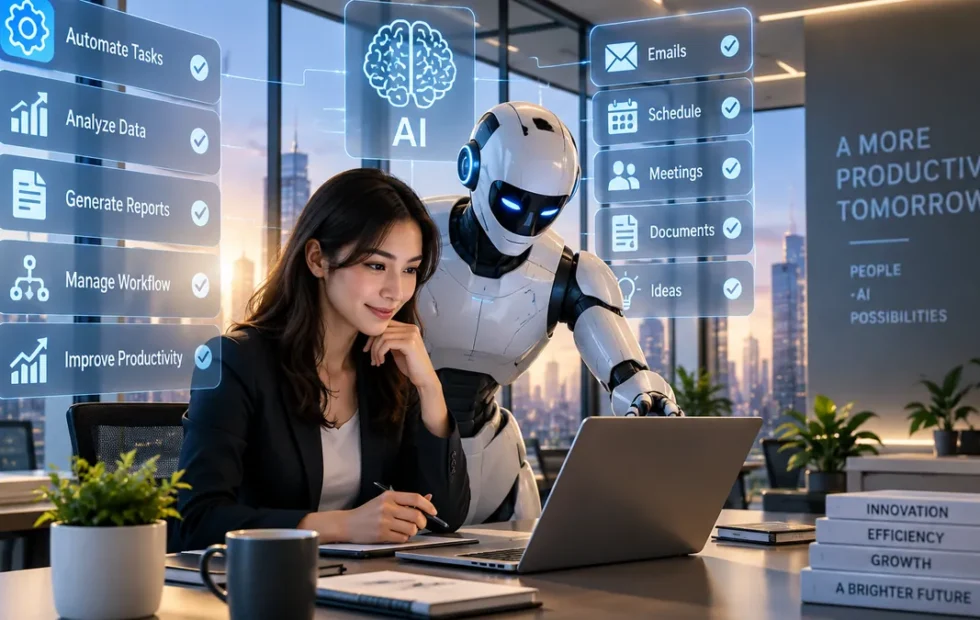
The Future of Work Is Not Waiting for Full Automation
Companies do not need human-level artificial intelligence for work to change. The transformation begins when AI can remove parts of a job.
Writing, research, coding, scheduling, data analysis, support, documentation, and reporting are already being reorganized around AI assistance.
Jobs Break Into Tasks
A job title can contain dozens of tasks. Some require judgment and relationships; others are repetitive and digital.
AI adoption is therefore likely to change jobs unevenly. An employee may spend less time producing first drafts and more time reviewing, deciding, communicating, or handling exceptions.
Managers Need New Metrics
If AI increases output, old activity metrics become less useful. Counting emails sent or reports produced may say little about business value.
Managers need to measure outcomes: resolution time, revenue, quality, customer satisfaction, error rates, and cycle time.
Smaller Teams Can Become More Capable
AI gives small teams leverage. A manager can access analysis without a dedicated analyst. A salesperson can automate account research. A founder can create marketing materials without a large creative department.
This may flatten some organizational structures and increase the value of employees who can coordinate tools, make decisions, and take ownership.
Trust Becomes a Workplace Skill
Workers need to understand when AI is reliable and when it needs verification. Blind trust is dangerous, but refusing to use the technology can also reduce productivity.
The valuable skill is calibrated judgment: knowing how to prompt, check, challenge, and improve AI output.
Companies Are Being Redesigned
The future of work is not only about which jobs disappear. It is about how companies organize work when digital systems can perform more of the routine execution.
Businesses that redesign processes rather than simply adding AI tools on top of old workflows may gain the largest productivity improvements.
Conclusion
Business conditions are changing quickly, but the central lesson is consistent: companies that understand the underlying economics, measure real outcomes, and adapt faster than competitors are better positioned to turn uncertainty into opportunity.

good